Table of contents
RTP (return to Player)
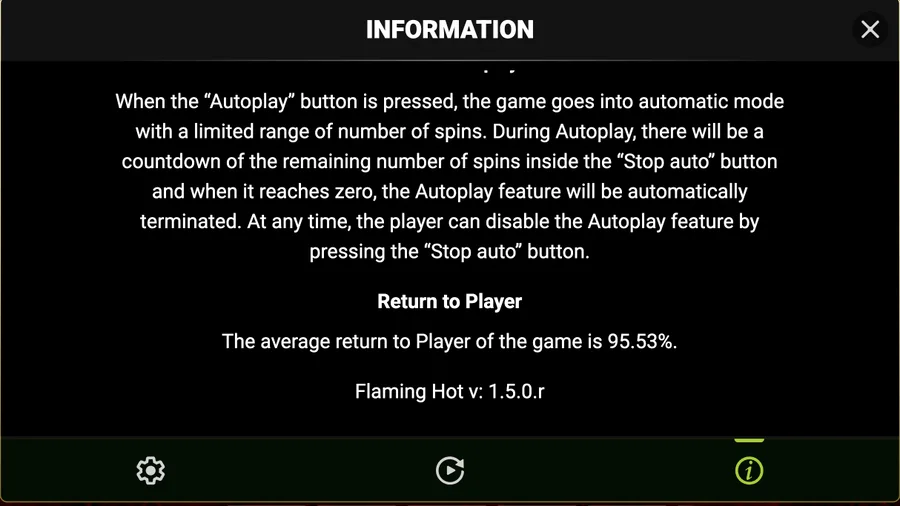
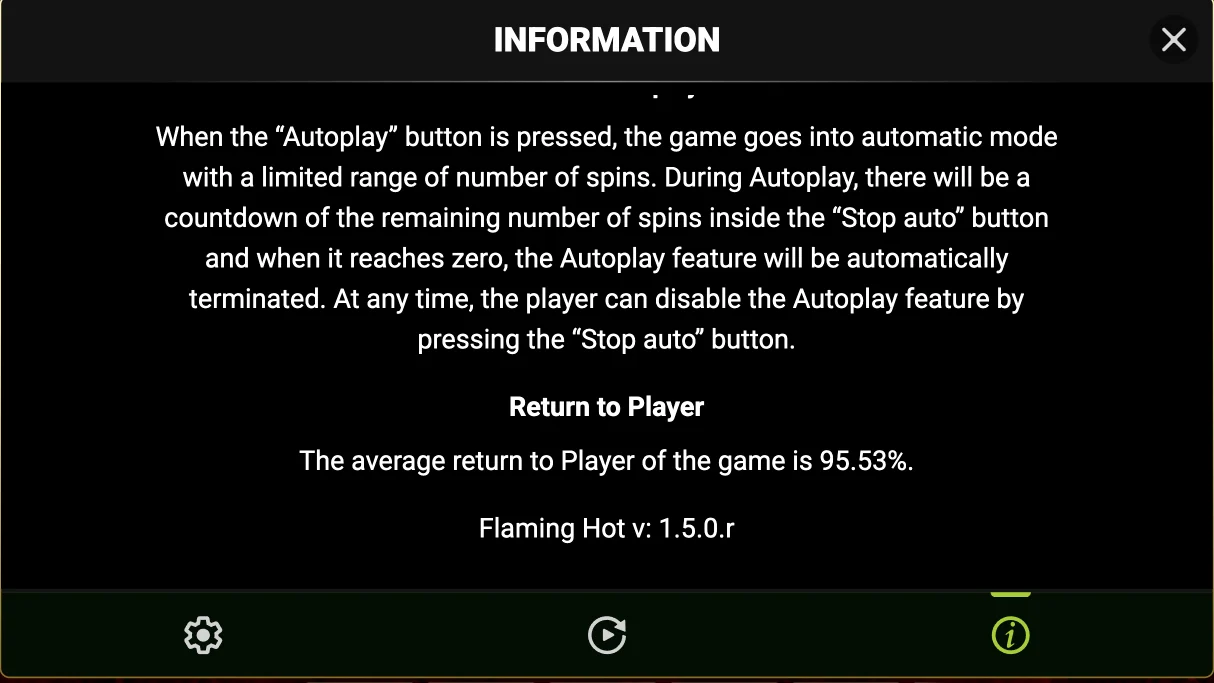
RTP is the share of all stakes a game is built to return over a very long run, and Flaming Hot states it as 95.53%. The rules screen and the Amusnet game page print the same figure, so 4.47% of every stake stays with the house.
- Game:
- Flaming Hot (an Amusnet video slot)
- Type:
- Slot game
- RTP as published:
- 95.53%, and the game and the maker agree on it.
- Max win:
- 1000x the bet on a winning line, which the maker states per line and not per spin.
Two Screens, One RTP Figure
95.53% turns up in two places and they match. The client's rules screen reads "The average return to Player of the game is 95.53%". The key-facts list on the Amusnet game page carries the same number. Both take about two minutes to check for yourself.
Open the rules. Read one line. The figure sits right there.
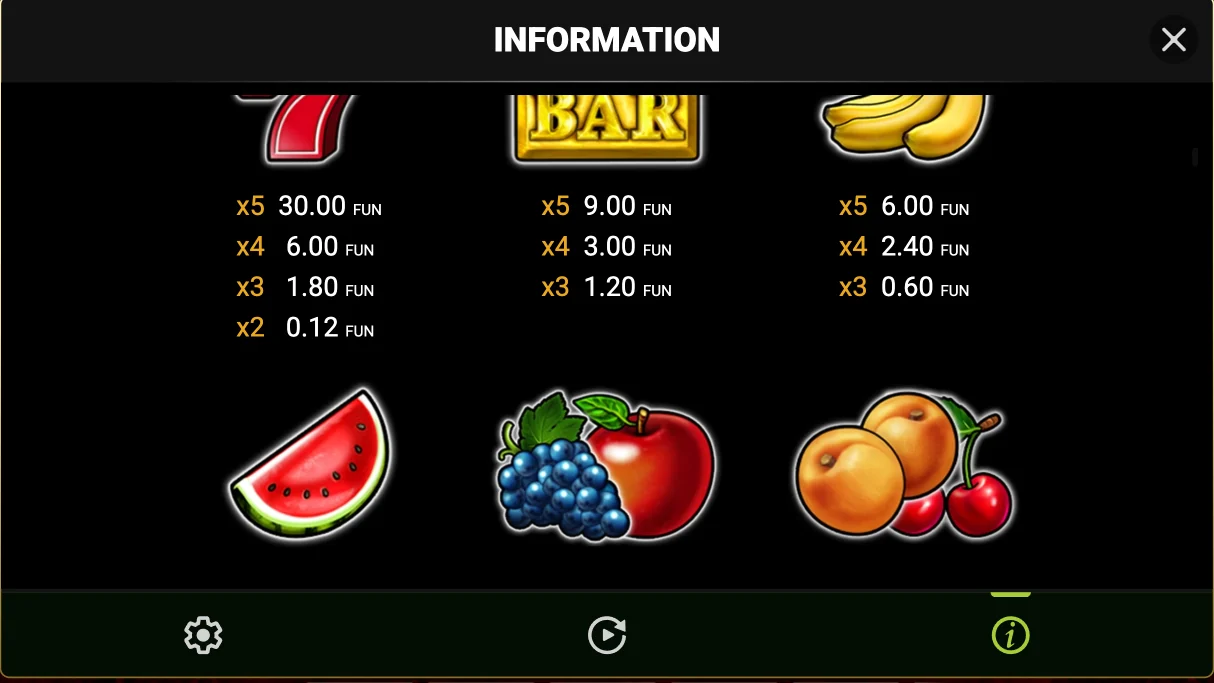
That agreement is worth naming, because agreement fails elsewhere around this game. On the return itself the catalogues are almost unanimous with the maker, and the single outlier we found prints 96.00%. On the maximum win they split from the studio altogether. They print "maximum win of 1,000x the bet" where the studio writes "1000 x bet per line", and the paytable settles that argument in the studio's favour: 30.00 for five sevens at a 1.20 stake, which is one line and not a round. The same paytable pays 600.00 for five Scatters, because a Scatter is multiplied by the total bet, so 30.00 is nobody's idea of what this game can pay in a spin.
On the return figure, though, the maker and the game agree. That is why we treat 95.53% as solid rather than as a marketing number.
Where Flaming Hot Prints the RTP
| Surface | What it says |
|---|---|
| Rules screen, client v: 1.5.0.r | "The average return to Player of the game is 95.53%" |
| Amusnet game page, key facts | 95.53%, alongside volatility 2 out of 5 |
| Implied house edge | 4.47% of every stake |
| Split between base game and jackpot | not published |
Read on ; the maker can change a screen without saying so.
What the Number Leaves Out
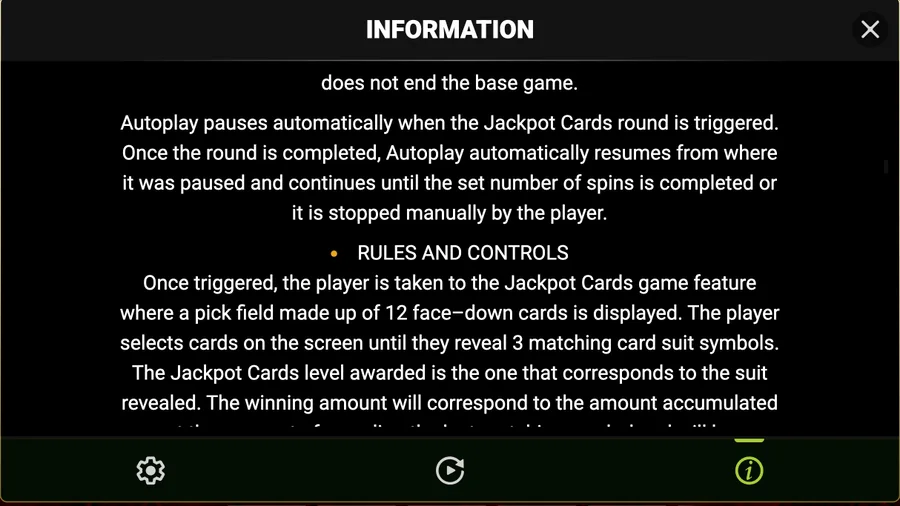
The number leaves out its own split: four Jackpot Cards meters sit above the reels, play pays for them, and the share going their way stays unprinted. The rules say as much about the funding itself: "The contributions to each level are calculated based on a percentage of the player's bet. No amount is deducted from the player's bet."
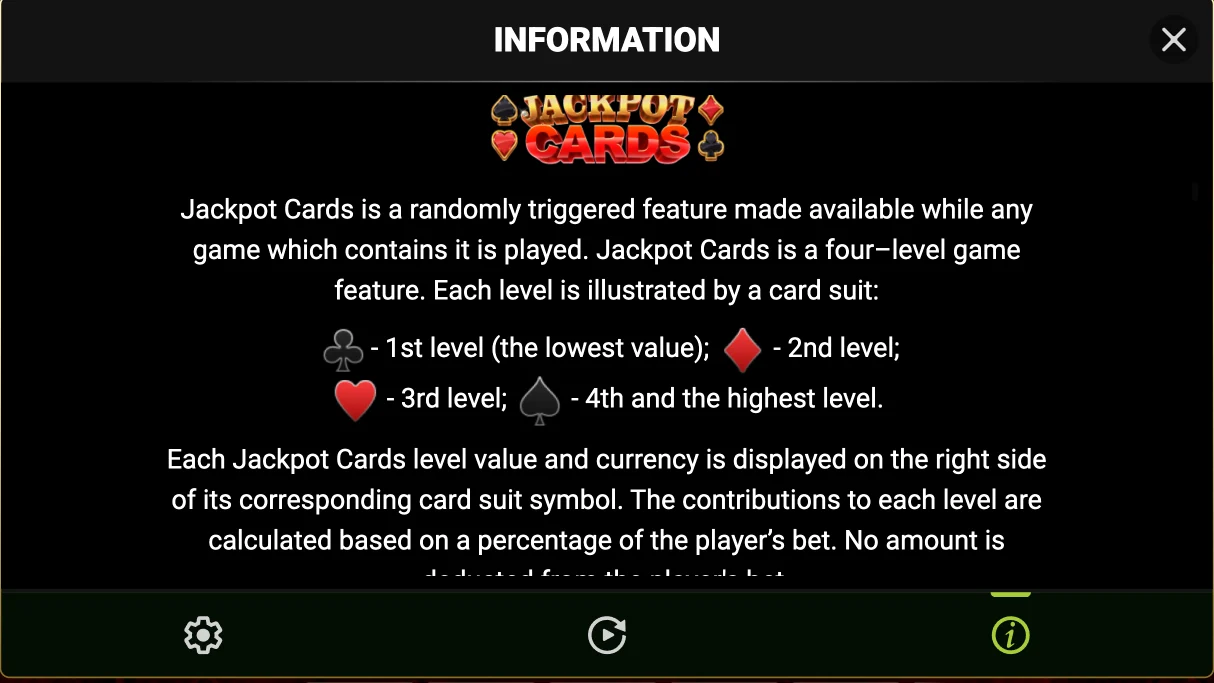
The percentage stays unprinted. So does the seed each level restarts from, and a ceiling on a level appears nowhere in the document.
So 95.53% is a blend. Part of it comes back as base-game wins in the round you played. Part of it flows into four meters. The ratio between them is absent from the client, and hit frequency is absent as well, from the rules and from the studio page alike.
Why a 0.40 Spin Cannot Be Costed
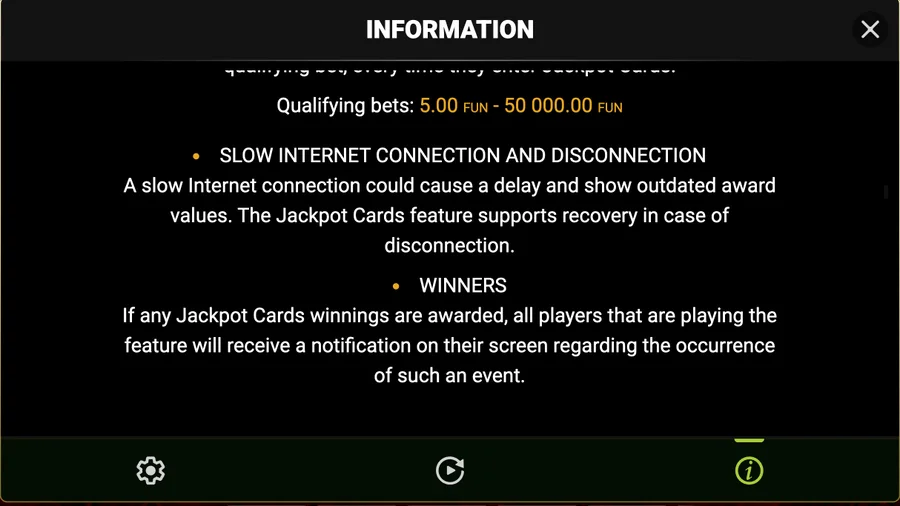
Costing a 0.40 spin takes one figure Amusnet keeps to itself. The rules print "Qualifying bets: 5.00 - 50,000.00", so a spin under 5.00 sits outside all four levels.
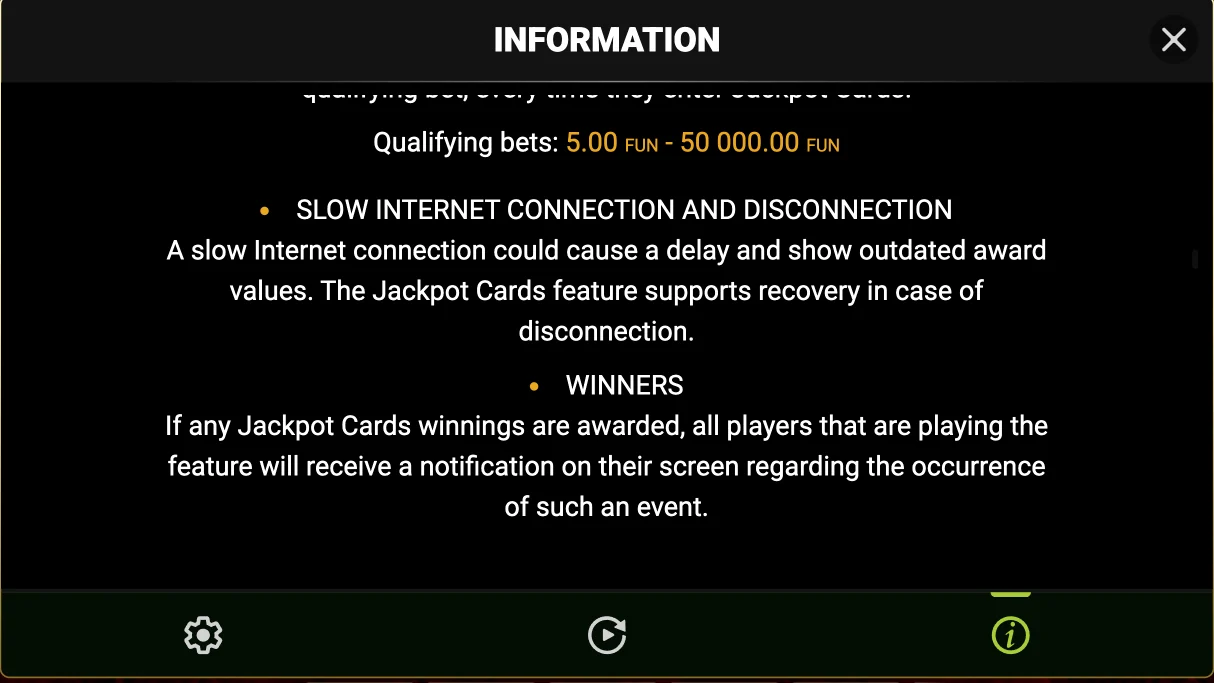
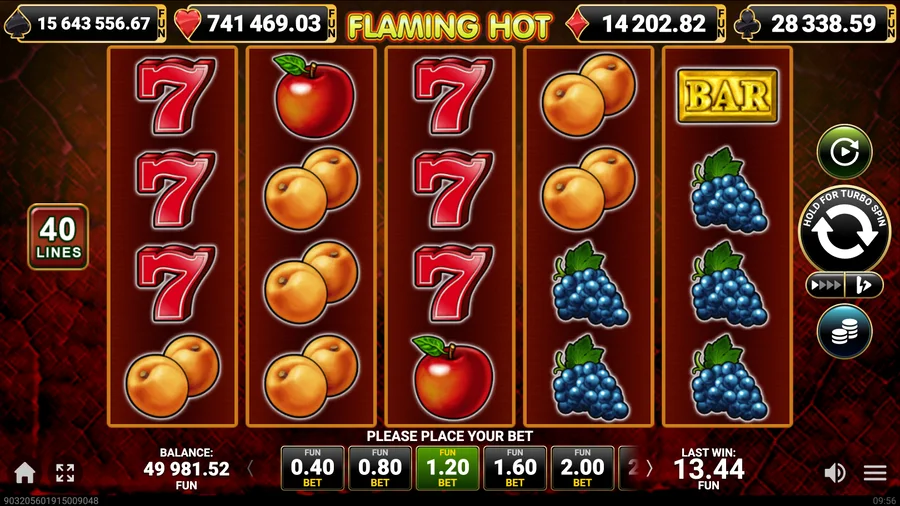
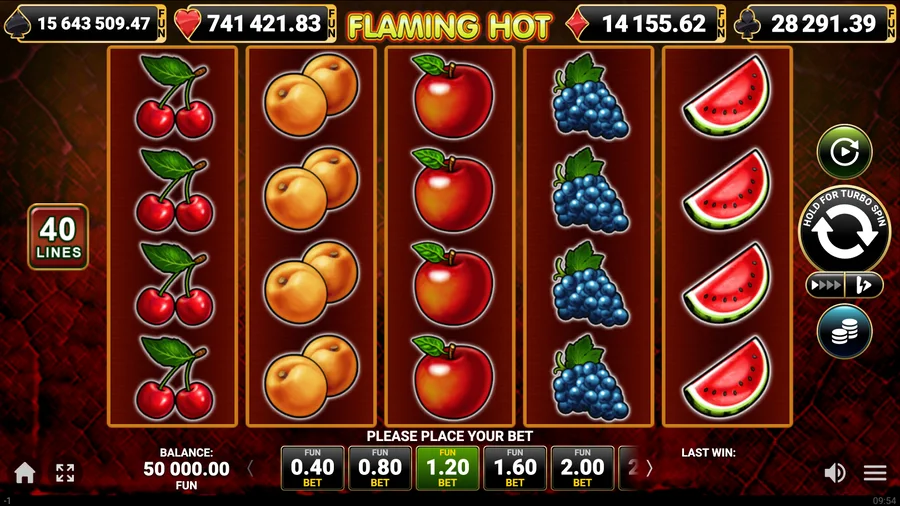
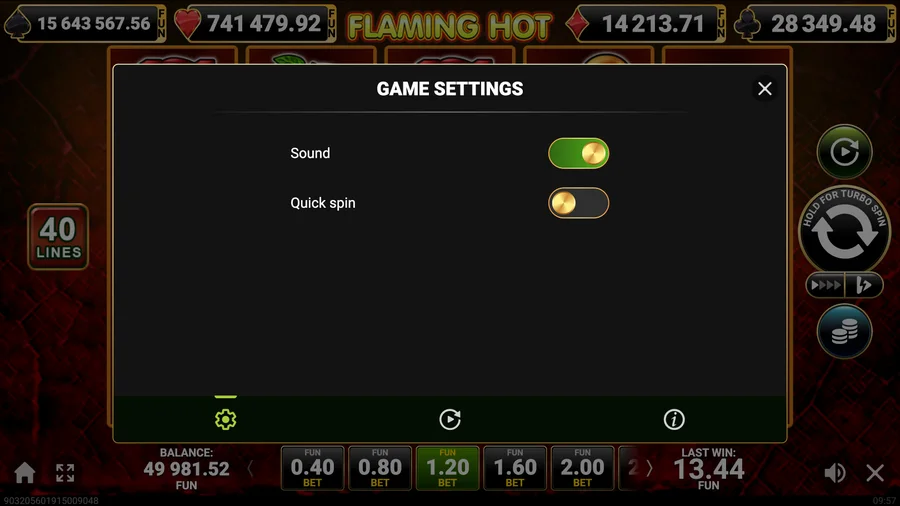
The game opens at 1.20 and runs down to 0.40. The 5.00 button is missing: the forty stake steps go 4.00, then 5.20, then 6.00. That makes 5.20 the cheapest qualifying spin, and 4.3 times the default.
A player at 0.40 therefore helps fund four meters that stay shut to them, and what that costs their own return lies outside anything the published figures can tell you. The contribution rate is unprinted, so the split between base game and meters cannot be worked out at all. Read the rules on their own terms and the contribution need not even come out of the returned share: the same screen says "No amount is deducted from the player's bet", which leaves the 4.47% house edge as a candidate source too. We can't settle that, and neither can you. A page handing you a figure for the sub-floor return has invented the figure.
We do not recommend treating the published 95.53% as your own return if you play below 5.20. It is the figure for the whole game including a progressive you are shut out of, and the share that progressive takes has never been printed, so your own number is unknowable rather than merely lower.
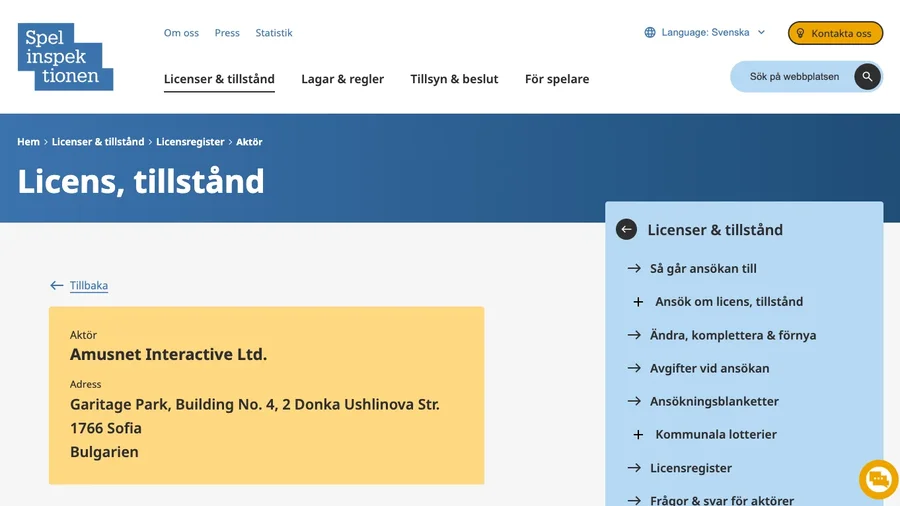
Britain's technical standards treat the eligibility of a participating customer as a disclosure obligation attached to the theoretical percentage itself. RTS 9A reads: "If a player is not eligible for a game's progressive jackpot prize this should be made clear, along with their respective theoretical RTP." Amusnet appears in no British register. A British build of this game exists nowhere, so we use the standard as a measuring stick rather than as an accusation.
Reading the RTP Inside the Client
The figure sits at the end of the in-game rules, in a section headed Return to Player, one sentence long. Open the rules from the game's own menu and scroll to it. Two screens earlier, the Jackpot Cards section gives you the qualifying band, and those two readings together are the whole story.
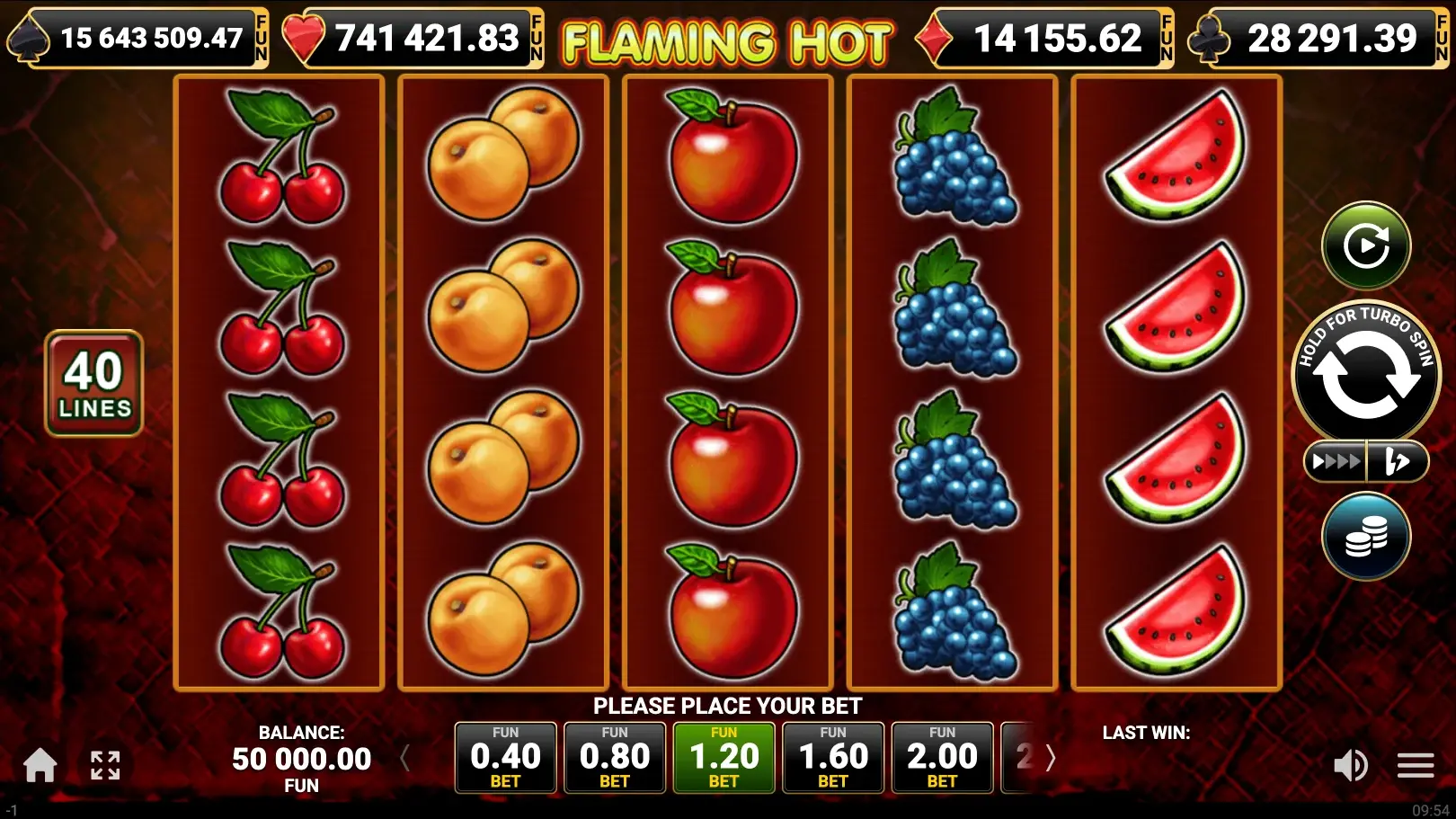
Short of time? Look at the stake selector instead. Whatever number is lit there, 1.20 by default, tells you straight away whether the meters overhead are in play for you. Below 5.00 they are scenery.